The Plan

She liked to think of herself as a woman of uncertainty, but that wasn’t really true. Sure, she didn’t know what to think about the Bible any more. She wasn’t sure how involved God really was in people’s lives and how much was a matter of perspective, but she was sure of more than she wanted to admit. She was sure that people weren’t primarily numerical and therefore didn’t belong in boxes. That probably applied to God, too. She was also certain she needed to think her own thoughts, make her own decisions and take responsibility for learning how to actually live her life. She didn’t want to survive. She wanted to be fully invested, aware, empowered, and present for all the days before her death. 

The difficulty lay in the fact that she didn’t know how to do this. For a myriad of reasons she’d grown up without acquiring many of the usual inter and intrapersonal skills that usually come with age. She was determined to find a path, though, whether she was late in starting it or not. She decided to brainstorm, and the list of her ideas is as follows:
  1. Take more initiative. Being docile and submissive isn’t always the true path to peace. Speak up when needed, even if it causes conflict. 
  2. When speaking up causes conflict, decide not to embrace the idea that it’s all your fault. Communication is good, even if it’s hard. Just don’t go too far and start flinging blame or cheap shots at people. That’s never okay. 
  3. Notice the good stuff. Maybe even write it down. It’s easy to lose sight of goodness in life when it’s mixed in with the inevitable pain, so work at recognizing kindness. 
  4. Remind yourself that you’re strong.  You don’t need permission to live. 
  5. Be gracious with yourself. Listen to the words you speak over yourself. If you wouldn’t say them to anyone else, don’t say them to yourself, either. If you fail in this, be gracious then, too. Forgive yourself and move forward. Consider coming up with some positive phrases with which to counter the negative ones. This idea makes you want to barf. Find out what that’s about. 
  6. Accept and recognize comfort. Soak it up when it comes. 
  7. Accept and recognize when you are loved. 
  8. Ask for help when you need it, you ninny. Wait. Refer to #5. You lovely woman. Oh, barf. I mean, Oh! Whiskey!
  9. Allow yourself space to heal without condemning yourself for it. If you’d been hit by a train you’d know it was reasonable to take time. You’ve been hit by a train. It just didn’t have wheels on it. 
  10. When you condemn yourself, try affirming yourself instead. Say what you’d say to one of your students. 
  11. Regarding Mom and Dad: They’re probably not going to change. Don’t wait for it. Work on yourself. Give up on the idea that you’ll ever be parented, even now, in a way that is deeply edifying. Love them where they are, how they are, without expectation. Find your security somewhere else. (This might be where knowing God loves you would be really helpful. It’s unclear why you haven’t been able to get that after all this time, and that makes you angry. Ask Tom about that.)
  12. When you’re up for phone conversations put boundaries on them. Start with five minutes. Go to 15 but not more than 20. 
  13. When they cut you off while you’re trying to tell them about your life, ask them why they did that. Guage their receptiveness. If that conversation goes nowhere, stop trying to tell them about your life. 
  14. When they’re upset about your boundaries, keep them anyway and don’t apologize for having them. You’re bound to empathize. Go for a walk afterward, or go up on the roof.  Yell into a pillow. Call a trustworthy friend and talk about it. Warn the friends ahead of time that you may need to be reminded that boundaries are healthy for everyone. Look at happy animal pictures on Pinterest. 
  15. When Mom and Dad don’t understand and you can’t explain, tell them you can’t explain and you’re sorry they’re in pain, but avoid shifting blame onto yourself to try to make them feel better. Leave the loose ends when needed. Write a poem about it afterward, or refer to #14. 
  16. After having any basically meaningless conversations with Mom and Dad, having stayed within your boundaries, hang up, eat a piece of chocolate and congratulate yourself for a job well done. Contribute $5 toward your next great pair of shoes. 
  17. Cry when it comes. 
  18. Breathe. 
  19. Invest in things that help bring you to life. Take art classes or poetry classes. Be brave and apply for that MFA program.  Be responsible to your day job but don’t allow it to rob you of fulfillment. 
  20. If the MFA program doesn’t accept you, don’t stop writing. 
  21. Keith: This requires a separate list. Work on that as it comes.  Remember that you love each other and don’t let society dictate your “normal.”  
That’s as far as she got, but it was a start. She was already used to laying on an ice pack for long stretches of time to help her back. Certainly she could implement this. With help. And grace for flubs. In fact, when she screwed up and did something wrong she determined to stand up and walk across the street to a coffee shop and get some tea if it was during business hours. If it was late, she’d write “I love me” in Word on her iPad, and make each of the letters a different color. 
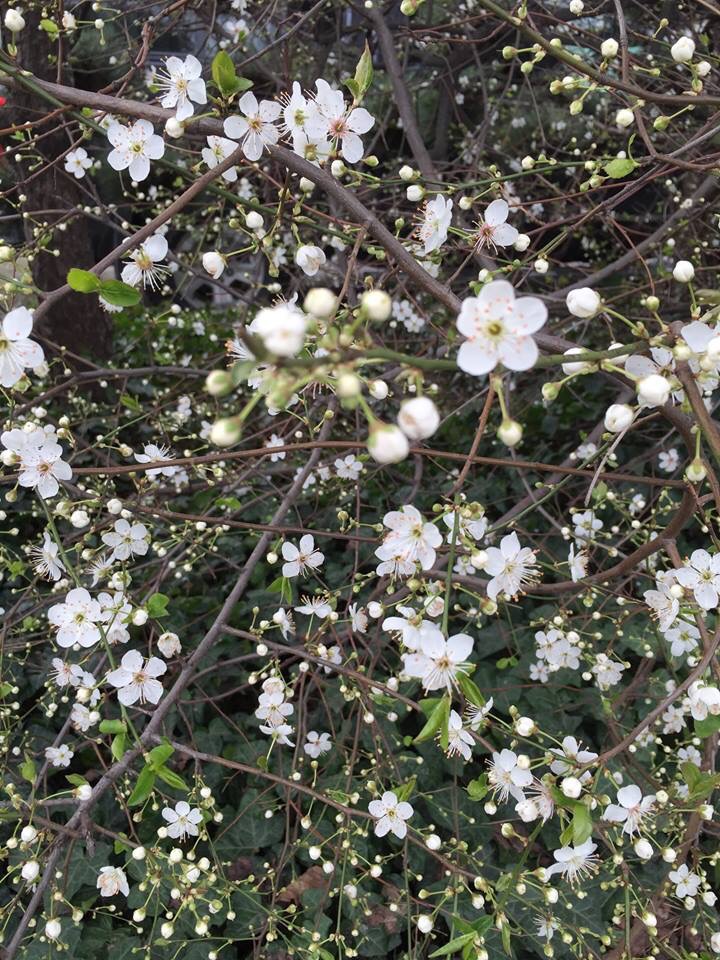


Dear Me

My friend, for one who can be so quiet the voice you have is bold. I don’t know where you find the courage but invariably you own your words like land you’ve bought with blood. Heartsick, your broken drumbeat pounds inside the knowing all the breaking in the world. I always thought you’d be a cello, you know, instead of tympani, but then, your mother played the pipe organ like a Gothic god. It’s no wonder part of you is tuned to always hear the cracking of her bones.  Her suffering was silent to everyone else. 

Everyone else. 

No one else. It made you alone to hear it and there was nowhere for you to go. Go now. Buy earplugs. Listen to woodwinds until the channel can change. Make friends who only drain you in the normal way, then fill you up with hugs and affectionate  disagreements and eyes that see you crying in the rain even when it looks like the sun is shining bright. Even when you have to tell them but you can because they’re not the sort to faint at the sight of blood. 

You are purple. You are complex, hot and cold and hard and softer than that silky white cat who saved your life when your brother died. You know how to leave but you always choose to stay. The world still needs you, telling squirrels you love them and seeing flower songs shimmering opal along the edges of the evening sky. It’s your legacy. You get to see and love, but you have to pay for the seeing. 

Maybe it won’t always cost so much. Maybe you’ll be reimbursed. Maybe you are even more lovable than rabbits or marmots or baby dear ducking their heads in the grain fields. Maybe the strength that seems like it’s cruel, forcing you sometimes to keep breathing when you’d rather stop, is actually being kind because if you just keep breathing there will be beauty and joy and surprising comfort that will make all the extra breathing worthwhile. 

I want you to hold onto possibilities with the same tenacity you’ve employed so you could take ownership of your words and live. Life is the goal. You’re not alone. You are loved. You are worthwhile and you have a lot to offer this crazy, fucked up world, but you (listen, you) are not fucked up. You are wounded, but you already know that’s not the same. A person can be wounded and be a rock star. That’s you. You get extra points just for breathing, because you’re unique and valuable and sensitive. Being you is good. Be you.

Two-way

What is a conversation, really?  It must, of necessity involve at least two persons who are speaking. But do they have to be speaking at the same depth?  Can it qualify if one participant dominates?  What if there is something really obvious to be said, and the person who should say it doesn’t say it, and the other person knows it’s useless to bring it up without the other?  Maybe the other couldn’t handle the answer to what should be that important question?  I don’t know. Maybe it’s enough to be kind and as present, on as authentic a level as possible.   I hope so. 

I called my parents today. I said I had five minutes or so, which led to almost ten. I hadn’t spoken with them for a year and three months. The really odd thing was that they seemed to continue on as though nothing had happened. All that worrying I did about not being able to answer their questions was completely wasted. I didn’t really want them to ask questions I couldn’t answer yet, but it was surreal to be so superficial after such a long time. I guess a part of me is always going to yearn for a healthy relationship with them. And yet, I think what I’d better focus on is to have the healthiest relationship possible with people who’ve chosen to remain in the same emotional and cognitive snares they’ve dealt with since childhood. It may sound like I’m being hard on them. As far as I can tell they’ve had opportunities to grow but haven’t taken them, but I don’t know what’s in their hearts. Truly, they both carry deep wounds with them everywhere. It’s just that I’m not responsible for making those wounds feel better. It isn’t my job to make them feel happy and secure. It’s my job to be responsible for myself, my responses, my emotional and mental health. It’s my job to figure out how to draw boundaries and keep them, even if it makes them unhappy. It’s my job to know how much and what I can give without doing damage to myself. 

For now, that means they’re going to receive intermittent 5 minute phone calls on speaker phone from my therapist’s office. After my call today I spent 2-1/2 hours with my chiropractor. My whole back seized up. I’d say that’s all I can do, but doing it was kind. It was considerate of my mother’s upcoming birthday. I was as present as I could be with people who didn’t say anything of consequence, except that they loved me, which I really appreciate. They could’ve been real assholes about it, so oblivious isn’t all that bad, I suppose. My job is me. Their job is them. My job is me. Their job is them. 

Maybe we never get to relate in such a way that I receive as well as give. Maybe this will be until the end. Maybe that’s okay. All right, it sucks, but I have been profoundly blessed by people who truly care about me. I have amazing, two-way people in my life, and we give and receive from each other constantly. It may not be the same as having that relationship with parents, but it’s far from a negligible gift. 

I’m going to let Mom and Dad be Mom and Dad. My needs are met elsewhere. I can give what is healthy for me to give and learn to say “no” to things I legitimately cannot do. That will be the hard part. I’ve always wanted to make them happy, and it’s time for me to give up on that. They haven’t realized I’ve given up on that yet, and that will cause a few internally charged silent moments, I’ll bet. Still. They’re going to have to get used to it. I’ll give them light conversation-ish as I’m able and that will have to be okay.